


When choosing a school in Singapore, you want to know that your child will receive attention when they need it. Will their teacher notice a misunderstanding? Will they have time to ask questions?
The main advantage of small class sizes is the opportunity for more of these everyday exchanges. However, numbers alone tell only part of the story. What teachers do with their classroom time matters too.
At GIG International School (GIGIS), we value opportunities to understand each learner. Here, we explore the benefits smaller classes can offer and how our teaching approach supports children with different needs.
A child may read confidently but struggle to explain a character’s motives. Another may solve a maths problem correctly without understanding why the method works. These differences are easier to address when teachers have time to look beyond the answer.
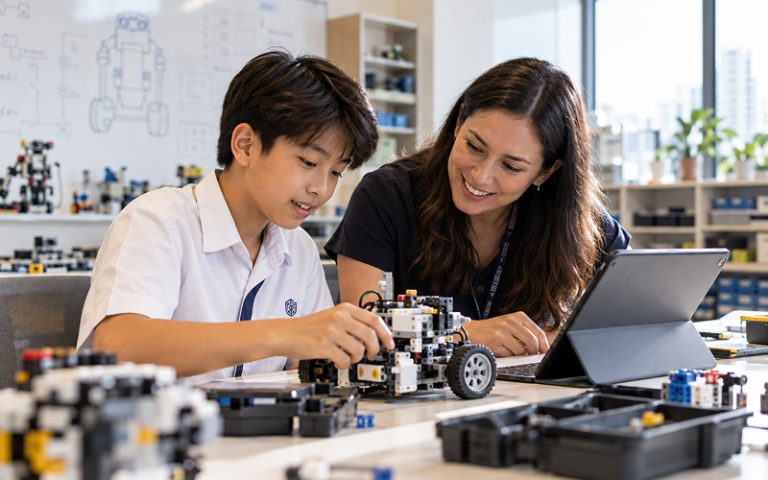
One of the most valuable advantages of small class sizes is its ability to faciliate personalised learning and individual support. With fewer learners to attend to, teachers have more opportunities to check understanding, offer another explanation, or introduce a suitable challenge. For a child who is struggling, this might mean breaking a task into smaller steps. For one who is ready to progress, it could mean applying a familiar concept to a new problem. Each child receives guidance that helps them take the next step in their learning.
Some children readily put up their hands while others may hesitate, even when they have something useful to say. Small class sizes allow for more meaningful student-teacher interactions, giving educators valuable opportunities to understand each student and encourage engagement in appropriate ways.
For example, a quieter learner might benefit from discussing an answer with a partner before sharing it with the class. A child who fears mistakes may need reassurance and specific feedback. Small groups make it easier to have frequent conversations, helping teachers build familiarity with each learner. Over time, that understanding can help children feel more comfortable asking for help and contributing ideas.
Smaller classes can give students more time to explain their reasoning, compare approaches, and apply what they have learnt. In a maths lesson, for example, discussing why a method works can deepen understanding beyond getting the correct answer.
These discussions also encourage children to draw connections between concepts and approach unfamiliar problems with greater confidence. With effective teaching, this deeper engagement can support stronger academic performance.
At GIGIS, we follow a teacher-to-student ratio of 1:28. Our curriculum, structured assessments, and proprietary 4Q Learning Framework give teachers ways to turn classroom attention into support for each learner.
Our Unique Hybrid Curriculum draws on practices from Cambridge and International Baccalaureate (IB), combining enquiry and skills-based learning with foundation and extension work. This flexibility allows teachers to offer different levels of support or challenge while keeping students focused on the same learning goal.
Closer attention helps teachers decide how to use that flexibility. In a mathematics lesson, for example, checking a student’s working can reveal whether they understand a method or are simply following memorised steps. One learner may benefit from a visual explanation and guided practice, while another is ready to apply the concept to an unfamiliar problem.
The curriculum provides options, while regular interaction in smaller classes can help teachers choose an appropriate next step. Your child has opportunities to strengthen their understanding where needed and explore further when ready.
At GIGIS, support begins with understanding what a child already knows. Our admissions proficiency tests in English and Mathematics help identify learning gaps and inform a customised bridging programme. This can be particularly useful for students joining from a different curriculum.
During the school year, formative and summative assessments help us review progress. Portfolios also document learning in our Cambridge Primary Curriculum, specifically in Classes 1 and 2, while our IGCSE assessment approach includes a pre-board examination.
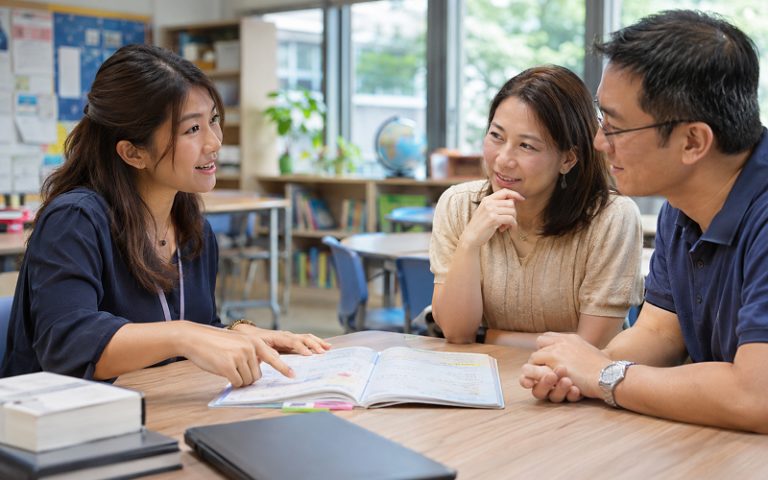
Classroom observation adds context to these findings. An incorrect answer might reflect a gap in subject knowledge, difficulty interpreting the question, or trouble explaining an otherwise sound idea. Opportunities to discuss a student’s work help teachers understand the difficulty more precisely and decide what to revisit. For parents, this supports clearer conversations about their child’s progress and next steps.
Our proprietary 4Q Learning Framework covers cognitive skills, attitude, social skills, and sustainability. It gives qualities such as empathy, collaboration, reflection, responsibility, and independence a clear place alongside academic learning.
Closer classroom interaction helps teachers notice how children put these qualities into practice. During a shared project, one student might contribute ideas confidently but need reminders to listen. Another may work well independently yet hesitate to take responsibility within a group. Recognising these patterns creates opportunities for guidance during the activity itself.
Through the 4Q framework, we consider how children approach challenges, work with others, and take ownership of their learning. This helps build a fuller picture of their development than academic results alone can provide.
Smaller class sizes offer many advantages, including stronger individual attention, stronger teacher-student relationships, and opportunities for deeper learning. When teachers use these opportunities effectively, they can help children build understanding, participate confidently, and make steady progress.
GIG International School offers a range of programmes for students of various ages, from Cambridge Primary for Classes 1–5 and Cambridge Secondary for Classes 6–8, to Cambridge IGCSE for Classes 9–10, and Cambridge International AS & A Levels. Our unique hybrid curriculum draws on practices from Cambridge and IB, while our proprietary 4Q Learning Framework supports academic, social, and personal development. Together, these provide a learning pathway that helps students build knowledge, develop independence, and prepare for further education.
Contact us to learn more about our approach today.
Not automatically. When comparing international schools in Singapore, parents should also consider teaching quality, curriculum, and classroom management still matter. The real benefit comes when teachers use the smaller class to give more specific feedback, adjust support, encourage participation, and understand individual students more closely.
Yes. Personalised learning is not only about helping students who are behind. Smaller classes can make it easier for teachers to recognise when a student has already mastered the work and provide more challenging questions, extension activities, or greater independence.
They can. In a smaller group, teachers have more opportunities to invite quieter students into discussions, check understanding privately, and build confidence gradually. This can make it easier for students who are hesitant to speak up in larger classes to participate more regularly.