
“How is my child doing?” is a question that deserves more than just a report card. For parents, it’s natural for you to want to know whether your child feels confident in class, where they are improving, and what still leaves them stuck.
That is why we prioritise effective parent-teacher communication at GIGIS. We share what we notice in the classroom, explain how we are supporting your child, and discuss what you can reinforce at home. Here are six things we share beyond grades and report cards.
Here are six things we share with parents beyond grades and report cards.
Your child may be making progress even if their grades have not changed yet. Teachers may notice that they are:
We also track how specific sub-skills develop within each module. In English, for example, a student may be getting better at using evidence to support an answer while still needing help organising a paragraph. These observations make learning progress easier to recognise.
You should not have to wait for a disappointing report card to find out that your child has been struggling. At GIGIS, ongoing assessments help us spot difficulties early and explain to parents which skills need attention.
In the Mathematics module of the Cambridge Primary curriculum, for example, a student may calculate accurately but struggle to choose the right operation for a word problem. Reviewing their working helps teachers identify where they get stuck and decide whether to revisit the concept, offer guided practice, or provide remedial instruction.
We share examples of your child’s work to make these conversations clearer. For our Lower Primary students, portfolios bring together classroom work, projects, and assessments, alongside descriptions of their learning. These student progress updates help you see the difficulties being discussed and understand where your child still needs guidance.
When your child needs help, we explain what support is being provided and how they are responding. This could involve revisiting a concept, providing foundation work, or offering more guided practice.
For students studying towards the Cambridge International AS & A Levels, the difficulty may involve applying subject knowledge to an examination question. A teacher might work through how to interpret the question, select relevant information, and structure an answer. A follow-up task can then show which parts the student can manage independently.
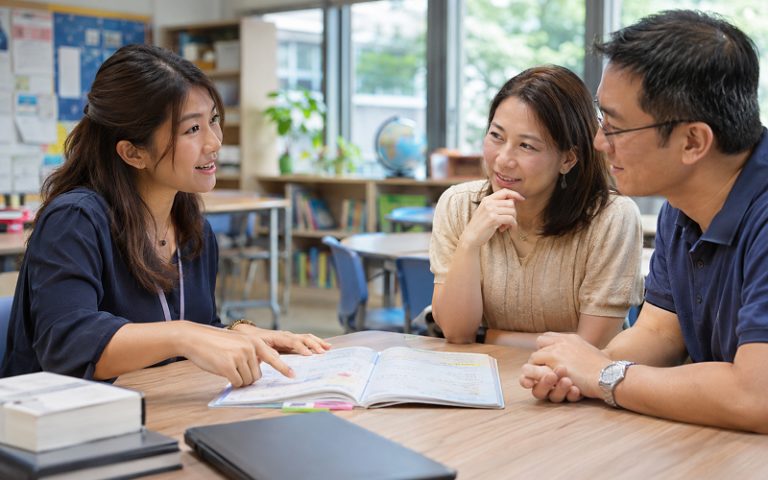
Parent-teacher communication will help clarify whether the support is helping and what needs further attention. This gives you a clearer understanding of the work happening in class and what you can reinforce at home before the next update.
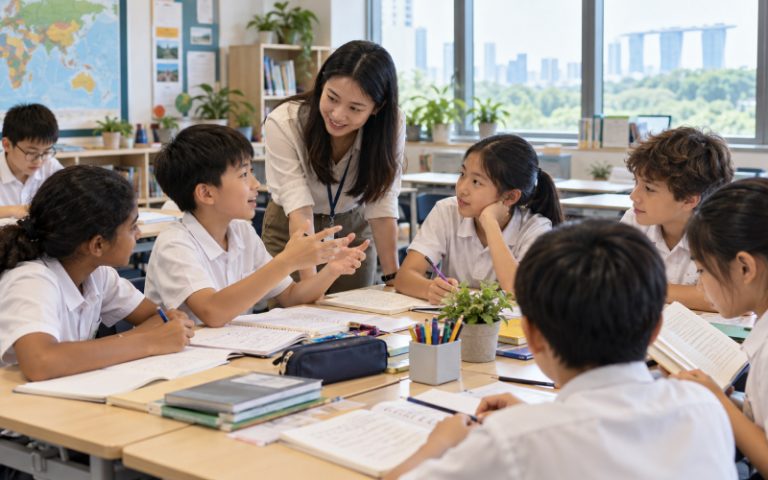
Changes in confidence or participation can signal that your child needs support, even when their grades remain steady. A previously enthusiastic student may stop volunteering answers, hesitate to begin unfamiliar tasks, or become quieter during group work. Teachers can explain when these changes occur and whether they are limited to a particular subject or happen across several lessons.
Your observations at home help complete the picture. If your child is also frustrated with homework or worried about making mistakes, sharing this gives us more context to explore what they are finding difficult. Listening to your child’s perspective can then help us understand whether they need clearer explanations, reassurance, or support with classmates.
A strong parent-school partnership helps us turn these observations into action. Together, we can agree on suitable support and look for signs that your child feels more comfortable participating, asking for help, and attempting tasks again.
You do not need to wait for the next Parent-Teacher Meeting to follow up on your child’s learning. Small, consistent actions can help you understand how things are going and make your next conversation with the teacher more productive.
A grade can tell you how your child performed, but the conversations around it help explain why. Through regular parent-teacher communication, we share the small improvements, recurring difficulties, and classroom experiences that help us decide what your child needs next.
GIG International School is an international school in Singapore offering education from Primary through Cambridge International AS & A Levels. Our unique hybrid curriculum and proprietary 4Q Learning Framework support academic learning alongside wider personal development. We aim to nurture curious, capable learners through enquiry, skill development, and attention to individual learning needs.
To learn more about our approach or discuss your child’s schooling, contact our admissions team.
Check the school’s reporting schedule and ask which platform or channel teachers use for day-to-day updates. If a concern arises, agree on when to check in again rather than waiting for the next report card. For example, after introducing a support strategy, ask when the teacher expects to have enough classroom evidence to review whether it is helping.
Bring a recent piece of work or a specific concern, and use it to guide your questions:
Before leaving, agree on one or two priorities so you know where to focus.
Yes. Describe what has changed, when it started, and how often it happens. For example, “Over the past two weeks, my child has become upset before Mathematics homework” gives the teacher more to work with than “They seem unmotivated”.
Ask whether teachers have noticed anything similar in class, then agree on a next step and a time to follow up.